Many businesses lose customers by confusing copywriting with content writing. It's simple:
- Copywriting is about sales. It uses brief, persuasive text to turn readers into buyers
- Content writing informs and builds trust. It lays the foundation for long-term growth and better search results.
- Copywriting is about sales. It uses brief, persuasive text to turn readers into buyers
Blogs, landing pages, and product descriptions need both skills to work well. So, we'll show 7 clear differences between copywriting and content writing. Additionally, you will see:
- Where they converge
- When each style works best
- Where they converge
Knowing the difference between copywriting vs. content writing can save you time and money. It can also help you pick the right writer for your business needs.
Table of contents
- 1. A copywriter sells, while a content writer informs
- 2. Copywriters create a sense of urgency and inspire emotional responses
- 3. Content writers lay the groundwork for future sales
- 4. Copywriters write short-form copy, while content writers write long-form copy
- 5. Content writers contribute to a long-term strategy
- 6. Content writers drive organic traffic; copywriters turn that traffic into leads
- Frequently Asked Questions (FAQs)
What Is Copywriting in Marketing?
It's the bridge between attention and action, like a salesperson's voice. Thus, you'll need a copy that quickly gets to the point and stimulates a purchase. So, a clear benefit headline can bring far more conversions than a cluttered message.
But it isn't just for product pages. It's used in other formats such as:
- Ads
- Landing pages
- Email marketing
- Video scripts
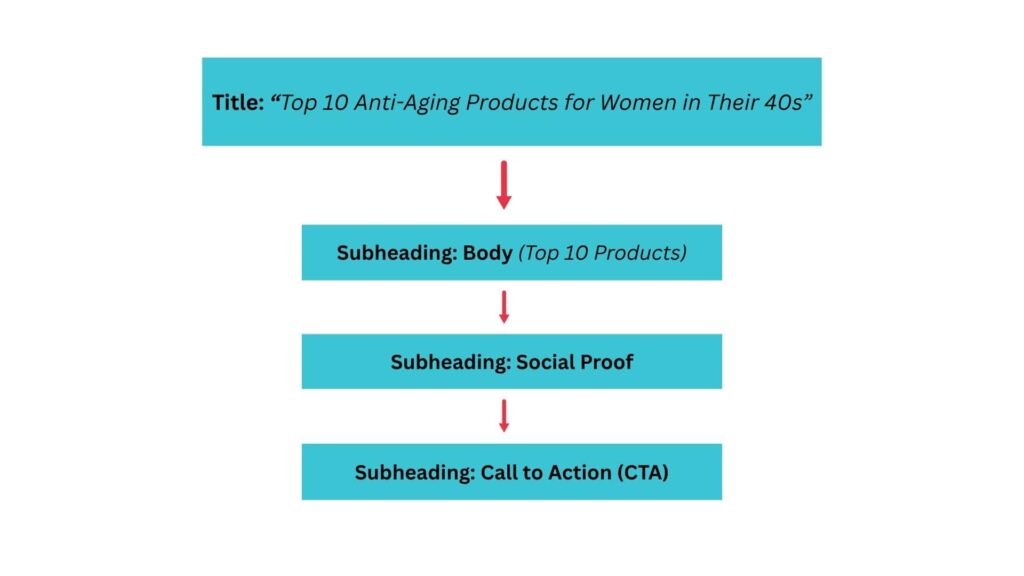
Here's an example outline of a short-form copy sequence, from the attention-grabbing headline to the body, social proof, and a call-to-action.
What Is Content Writing?
Content writing is the creation of informative, well-researched, and valuable text that educates or helps the reader. It often includes practical tips, expert insights, and actionable advice.
There's a different type of content writing, such as:
- Blog posts: In-depth articles that educate on topics like nutrition, technology, or travel.
- Newspaper articles: Pieces based on original interviews and firsthand sources.
- Social media posts: Short, story-driven updates that capture attention quickly
- Email newsletters: Informative content, including how-to guides or case studies, is designed to educate and engage subscribers.

Content Writing vs. Copywriting: Key Differences
Both serve distinct purposes. Copywriting aims to trigger quick actions, while content writing builds trust and provides information over time. Let's highlight their main differences.
1. A copywriter sells, while a content writer informs
A copywriter's primary goal is to persuade the reader to take immediate action, such as purchasing or signing up for a service.
How does it work? They use an active voice and direct approach, focusing on quickly turning prospects into customers.
On the other hand, a content writer's job is to inform or educate the reader. This can include:
- Providing helpful information
- Answering questions
- Discussing a topic in depth
- Providing helpful information
Although it does not aim for immediate action, it offers value over time. But first, you need a product description for your website that makes customers want to buy the products immediately—that's where copywriter skills come in.
✅ Copywriter would create short, punchy text highlighting features and benefits—words that push a quick sale. Next, detailed articles would help explain how the product can improve readers' quality of life.
✅ Content writer will inform readers, build trust, and educate them on why their product stands out in a crowded market.
In this case, both approaches work together to support your brand. While copy grabs attention and brings immediate actions, the other builds a foundation for future customer relationships.
2. Copywriters create a sense of urgency and inspire emotional responses
Copywriters use language that makes you feel like you need to act now. They choose words that spark immediate emotions—like excitement, urgency, or even a hint of anxiety about missing out.
For example, if a new smartphone is about to run out of stock, a copywriter might write, "Order now while supplies last!"
Content writers, in contrast, focus on providing information without the immediate push to act. They write longer pieces that explain features, share background stories, or offer tips.
3. Content writers lay the groundwork for future sales
Content writers create detailed content that builds trust over time. Imagine a tech company introducing a new laptop model. A content writer might publish several posts that explain:
"How to choose the right laptop for your needs"
"Tips to extend your device's lifespan"
"In-depth reviews comparing different models"
This kind of content helps potential customers learn about the product without feeling pressured to buy it immediately. Over time, as readers become more informed, they start to see the brand as a reliable source.
When these readers are finally ready to purchase, they are more likely to trust and choose the brand.
4. Copywriters write short-form copy, while content writers write long-form copy
Content writers use longer texts to educate and inform readers, like a textbook that systematically breaks down complex ideas. When readers want to learn about a topic, they need in-depth explanations, context, supporting data, and expert references—all of which require a lot of words.
Copywriters, in contrast, produce short-form copy focused on selling because customers don't need a full explanation, just the key details—much like a product label that lists only the most important features, benefits, and calls to action.
5. Content writers contribute to a long-term strategy
Google demands more proof of competence. For example:
- If you're offering medical advice, Google looks for evidence that the information comes from a qualified doctor or reputable sources.

- The same goes for legal advice—it should come from a licensed lawyer or be supported by authoritative references.
That's why blogs need a marathon strategy. By building in-depth content organized into major topics (pillars) and related subtopics (clusters), you cover every angle and demonstrate your expertise and authority.
This approach is especially important in B2B content writing, where building long-term trust with decision-makers is more valuable than generating one-time clicks.
6. Content writers drive organic traffic; copywriters turn that traffic into leads
Content writers boost organic traffic by creating articles that answer real questions people type into search engines.
For example, if you run a website selling running shoes, a content writer might create a blog post titled "How to Choose the Best Running Shoes for Your Needs."
This post offers practical tips, real-life examples, and answers to common questions that will help your website rank higher and naturally attract more visitors. And, once these visitors arrive, copywriters take over. They're crafting clear messages on product pages or landing pages.
Using the same running shoe website, a copywriter might design a product page with a brief, punchy headline like "Run Faster with Our Lightweight Shoes" and a call-to-action button that says "Buy Now" or "Get a 20% Discount Today."
If you're unsure which writing style fits your goal or need both, consider working with a team that offers copywriting services focused on clarity, conversions, and voice consistency across your brand.
Copywriting Vs. Content Writing: Where They Converge
Despite their different approaches, copywriting and content writing share 3 key traits:
- Both disciplines prioritize the audience. Whether promising a clear advantage in a headline or delivering actionable tips in a blog post, the end goal is the same: give readers something they find worthwhile.
- Effective copy and content rely on strong openings, relatable language, and a coherent structure to maintain and deepen the reader's interest from the first word to the last.
- In both cases, you research what your audience is typing into Google, then align your messaging—a punchy headline or a long-form article to match that intent and boost visibility.
When to Use Copywriting, And When Content Writing?
Copywriting is best used when your goal is to prompt immediate action. Here are a few scenarios where a copy approach can be highly effective:
- Product pages: Use persuasive, concise copy highlighting key features, benefits, and special offers that encourage quick decisions.
- Landing pages: Craft clear headlines and calls-to-action that guide visitors toward signing up, buying, or learning more.
- Email campaigns: Develop engaging subject lines and brief, impactful messages that prompt recipients to click through and convert.
- Online advertisements: Write snappy ad copy for social media or search engine ads that quickly capture attention and drive traffic.
- Sales promotions: Use limited-time language and urgency in your copy to spur immediate action during special campaigns.
Content writing works well when you must educate and inform your audience over the long run. Therefore, use content writing when you want to:
- Educate readers: Develop in-depth blog posts, guides, or tutorials that thoroughly explain topics and answer questions.
- Build long-term authority: Create evergreen content that attracts organic traffic and strengthens your site's reputation.
- Support SEO efforts: Craft comprehensive articles rich in relevant keywords that help improve your search rankings.
- Engage through storytelling: Use detailed narratives and research-backed insights to engage your audience and keep them returning for more.
What's Your Choice?
Content writing builds trust, copywriting drives action, and most businesses need both to grow. Not sure what fits your goals?
Schedule a call with our copywriting team to get clear messaging and content that converts.