Even the best title fails if your headline writing techniques are weak. Bad copies are often:
- Unclear
- Too long
- Generic
- Written in a passive voice
- Unhelpful
- Unclear
Our SEO writers will show you how to do the opposite and write a clickbait headline that makes people want to learn more. Let's find out how to use active words, keep it short and clear, and add real value.
What Does a Good Headline Look Like?
A great headline immediately tells readers what it's about and promises a clear benefit or solution, all in a concise package—ideally 6–12 words. Using numbers (like "3 tips" or "7 tricks") adds specificity, while words such as "quick" or "proven" build trust.
Also, a hint of urgency or curiosity ("now" or ending with a question) keeps people hooked. And don't forget to include your target SEO keyword and write in an active voice ("Learn," "Discover," "Boost") so both search engines and readers instantly recognize the topic.
Effective Headline Writing Techniques
Want readers to click, scroll, or stay longer? It all starts with the headline. Let's break down how to write one that engages.
1. Target Audience
Analyze their interests, preferences, and search behaviors to create content that aligns with their intent. You can use Google Search Console and tools like Semrush or Ahrefs to see which keywords bring traffic, whether users are looking for:
- Specific information
- Ready to buy
- Seeking help with a specific problem
This data shows what your audience needs and what Google considers relevant. With these insights, you can create headlines that match your readers' interests and queries.
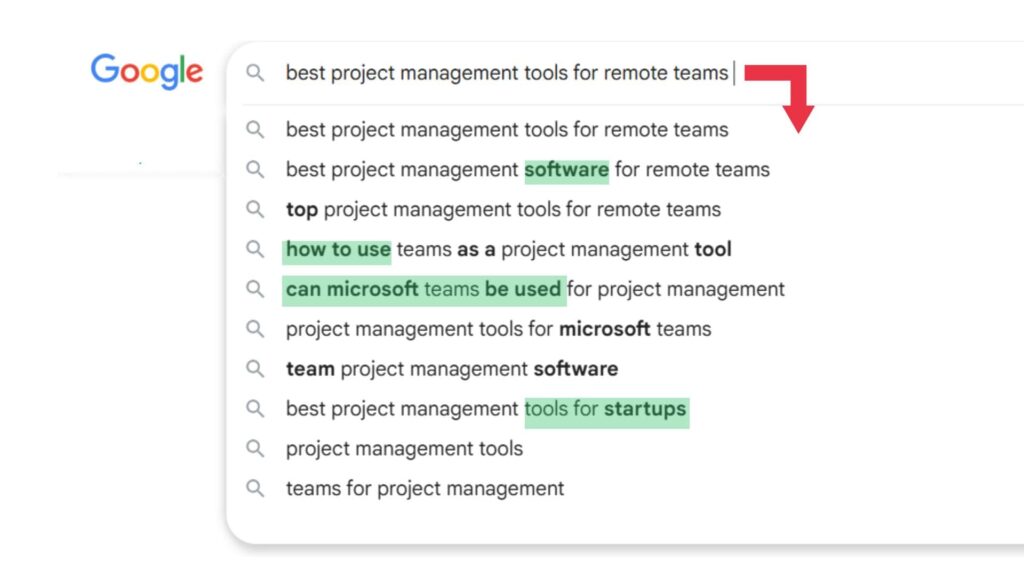
If many users search for "best project management tools for remote teams," it indicates a commercial investigation intent keyword—teams are researching, comparing products, and reading reviews before deciding, as seen in the examples below. Thus, a good headline example could be:
"Top 5 Project Management Tools to Enhance Your Remote Team's Productivity."
The article will help them narrow their options and find the best choice for their needs.
2. Use the Active Voice
In grammar, the active voice places the subject as the doer of an action, while the passive voice makes the subject the receiver of that action.
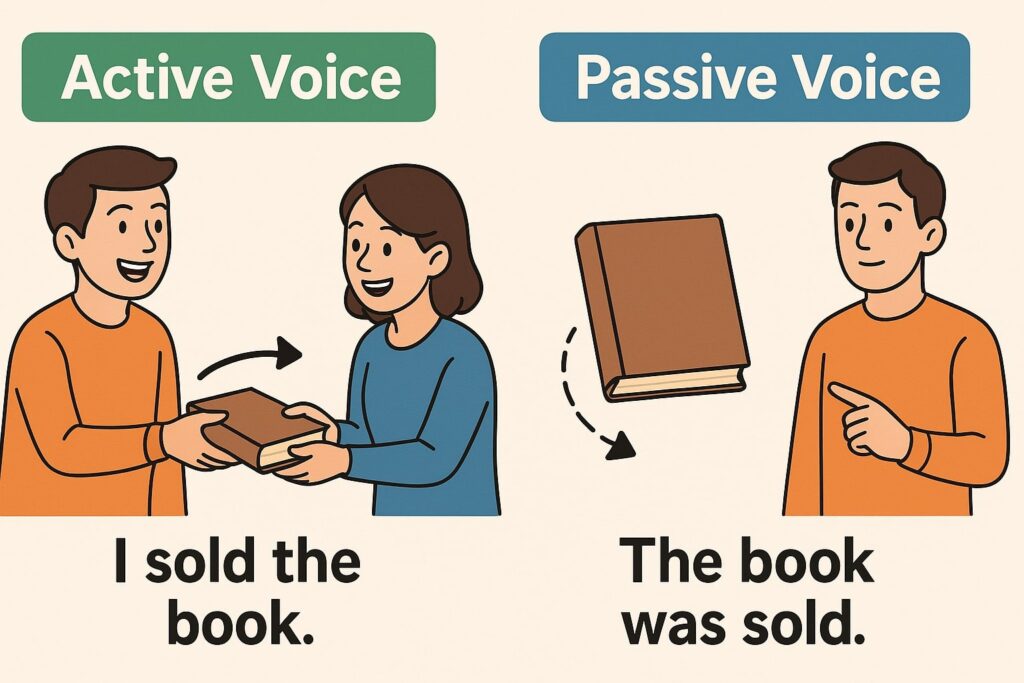
This two-panel visual shows on the left a person handing over a book (“I sold the book”) to illustrate active voice, and on the right the book receiving the action (“The book was sold”) to illustrate passive voice.
3. Keep it Short and Concise
Short copy grabs attention and sticks in readers' minds. For example, a headline might simply read:
"Keep it Short and Concise"
In contrast, a longer version might say:
"Don't use too long or overwhelming, as this will dilute your message."
So, how to make it more effective?
- Start by focusing on the core message or benefit you want to deliver and using simple, direct language that conveys your point immediately.
- Next, use strong action words to engage your audience and speak directly to their needs.
- Also, eliminate any extra words that dilute your message and test your headline by reading it at a glance to ensure it's easily understood.
4. Use Numerals
Numerals in headlines grab attention by offering a precise number of tips, tricks, or ideas that readers can expect to find.
For example, "8 Secrets to Transform Your Morning Routine" immediately provides a focused list of actionable advice.
Similarly, "11 Steps to Supercharge Your Social Media Strategy" promises a detailed roadmap, while "4 Tricks to Boost Your Website Traffic Instantly" signals quick, practical tips.
Why does it affect the human brain so strongly? Numbers break the monotony of text and give readers a clear idea of what to expect.
Implementing headline writing techniques can be a challenge, right? If so, working with a copywriting service can make it easier. We'll ensure your copy aligns with your brand tone, audience intent, and performance goals.
5. Make a Bold Promise
A catchy headline like "Double Your Sales in 30 Days" makes a strong, direct commitment that resonates with those looking to improve their business results. It tells readers exactly what they can achieve, making them curious and eager to learn more.
However, keep the promise realistic and achievable so readers feel confident in your offer. Be precise about the benefit, avoiding vague claims.
6. Teach People Something Useful
How do we do that? We focus on common problems your audience faces and offer a solution that feels accessible and beneficial.
Additionally, use simple language that communicates the promise of learning, and be specific about the benefits—whether it's saving time, improving skills, or solving a challenge.
7. Create Urgency
Strong marketing headlines include powerful and trigger words that spark strong emotions and prompt immediate action. Words like "ultimate," "exclusive," "unbelievable," "essential," or "secret" intensify your message and draw readers in.
Combine these with trigger words such as:
- WHAT
- WHY
- HOW
- WHEN
This creates a sense of urgency that makes readers feel they must act immediately, boosting click-through rates and keeping users on the site.
8. Test and Refine
Even the best headlines can improve. So, measure key metrics like click-through rates and engagement, and use A/B testing to determine what works with your audience. Then, use insights to adjust the wording, length, and formatting based on honest feedback and data.
Minor tweaks, such as a different power word or number, can make a big difference.
Ready to For Headlines That Convert?
Strong headlines are short, clear, and built around your audience's wants. When done right, they drive clicks and improve performance.
Book a call with our copywriting team to get high-performing headlines tailored to your brand and audience.