We all make mistakes, but even small errors in your copy can harm your brand. Ask yourself:
- Is your content fully accurate and fact-checked?
- Is your message clear and easy to read?
- Have you caught all the hidden mistakes?
We'll help you identify common writing mistakes that can harm your brand and provide simple solutions to correct them, ensuring your message always makes a strong impression.
1. Spelling and Grammar Errors
A tiny error—mixing up "affect" and "effect" or using "especially" when "specially" is intended—can make your writing appear rushed.
Simple phrases like "free rein" can be misused, confusing readers. Such mistakes aren't just trivial slips; they indicate that your content may not have been thoroughly reviewed.
While tools like Grammarly catch many errors, they often miss subtle context and nuances only a human editor can spot.
That's why a skilled editing team is invaluable—they carefully review every word to ensure your message is precise and clear, so your brand always presents a professional image.
2. Inconsistent Tone and Style
While variety can make your copy interesting, too much variation can confuse readers.
Imagine switching between "and" and "&" or "with" and "w/" throughout your text. Even small changes, such as using "California" in one place and "CA" in another, can leave your message feeling off, right?
It's like promising "12 Common Copywriting Mistakes" in your title, then only delivering 11 in the text body—it just doesn't add up. Therefore, consider these quick checks:
Consistent word choice (e.g., "and" vs. "&")
Uniform formatting (e.g., "California" vs. "CA")
- Matching promises with content
3. Jargon and Acronyms
You know your industry well, and using technical language can demonstrate your expertise. But what will happen if you fill your copy with too much of this specialized language? Many readers may not understand it.
For example, a plumber might use terms such as "elbow," "ABS," or "rough-in " that make perfect sense to a professional but might confuse someone seeking help for the first time.
Similarly, acronyms like ASAP, WIP, or FOMO might seem familiar, but overusing them can leave your audience puzzled if they are not familiar with them.
How can you find a balance? Instead of relying on such language, explain technical terms or replace them with everyday words. Also, highlight the benefits of your products or services rather than overwhelming your readers with complex details.
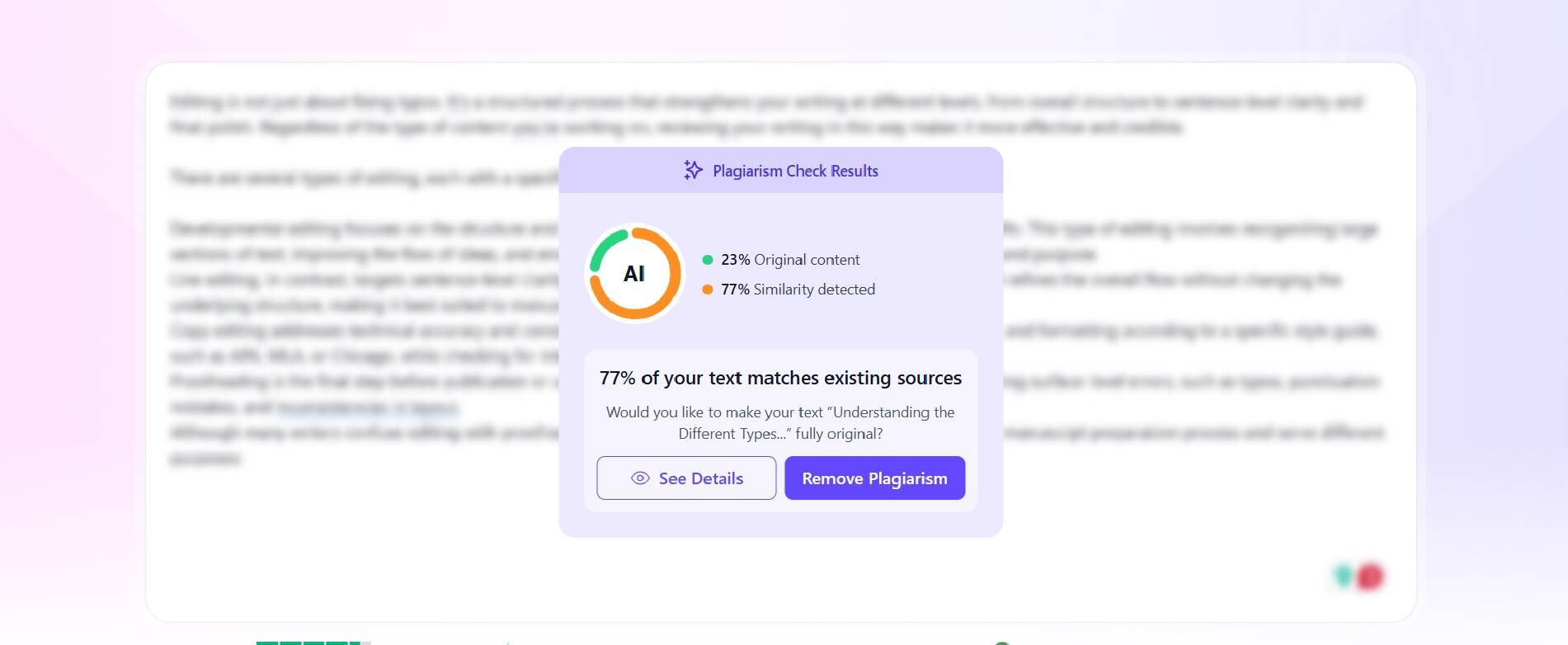
4. Plagiarism and Copyright Infringement
When you create content, everything you present must be truly yours—or properly credited if it isn't.
- Plagiarism occurs when you use someone else's words or ideas without properly citing their source. This can include copying text, images, or even a unique concept without a clear citation.
- Copyright infringement, however, occurs when you use protected material, such as a photo or video, without permission from the owner. Unlike plagiarism, which is an ethical issue, copyright infringement can lead to legal problems and fines.
So, remember these key points:
- Plagiarism: Using someone else's work as your own without acknowledgment.
- Copyright Infringement: Employing copyrighted material without permission.
Always double-check your sources and cite them correctly.
5. Passive Voice
The active voice tells your reader exactly who is doing what, making your writing direct and lively. When you use passive voice, the subject does not act—it merely receives it. Consider these examples:
Passive: "She will always beat out the competition."
Active: "She beats out the competition every time."
In the active sentence, it is immediately clear who is acting, strengthening your message and making it easier to understand.
Instead of saying, "Using the passive voice robs the content of immediacy," you might say, "The passive voice robs your content of immediacy." This small change helps you connect with your audience more quickly and clearly. However, passive constructions can be difficult to spot when reviewing your own text.
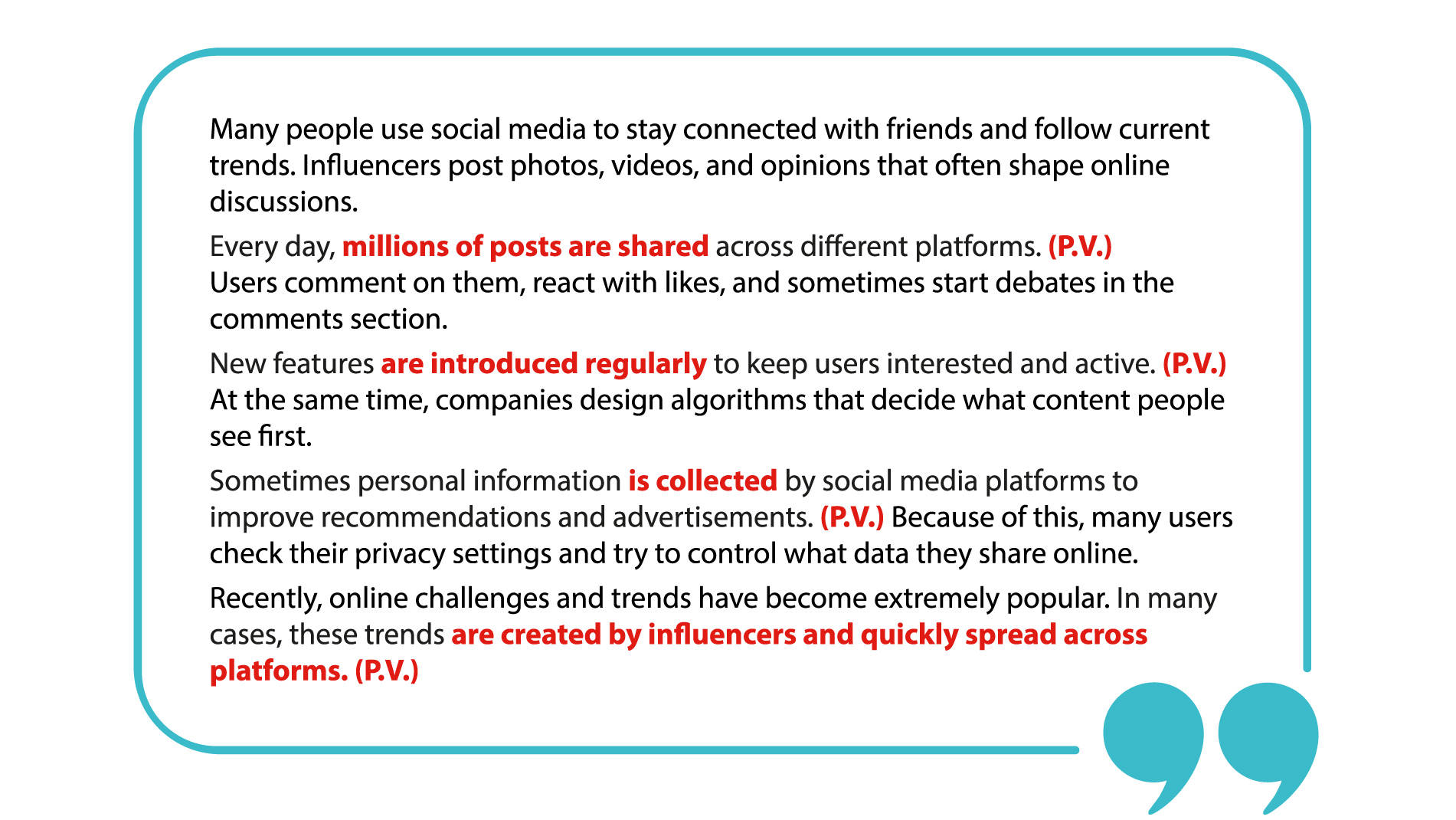
In these cases, editing and proofreading services can help identify unclear or indirect phrasing and improve sentence clarity before the content is published.
6. Typos
When you've written thousands of words, it's very common to miss a few minor typos because you already know what you meant to say. Even with spell-checking tools, errors like a misplaced letter or a missing space can still appear—especially in long texts or during the final rounds of editing.
Small mistakes, such as "using teh" instead of "the," can distract your reader from your message and give the impression that the work wasn't reviewed carefully. Ultimately, this can lead people to question the reliability of your brand.
Remember, taking an extra moment to review your text or having someone else take a final look can help catch these errors before they affect your brand's image.
7. Repetitive Content
Repeating the same words or ideas too often can distract from your main points.
For instance, if you describe your product as "amazing" in every sentence, your readers may overlook the true benefits because the word loses its impact.
Similarly, reusing phrases like "we offer excellent service" throughout your text can make your message feel less thoughtful and weaken its overall effect.
Instead, consider adding more details or examples to support your points.
8. Bad Formatting
Imagine reading a page with long blocks of text, no breaks, inconsistent fonts, or missing headings—knowing where to look first is hard. This kind of clutter can pull attention away from your main message. For instance:
- A page without headings or bullet points makes it tough for readers to spot key ideas.
- Inconsistent spacing and font styles create a disorganized look.
- Large, unbroken paragraphs can quickly tire your readers.
Have you ever felt that your content could be more visually appealing? In that case, careful review from an experienced editor can rework your text into well-organized sections that guide the reader naturally.
Protect Your Written Reputation
Our editing team frequently identifies these issues. If you feel something is off in your content, just contact us.