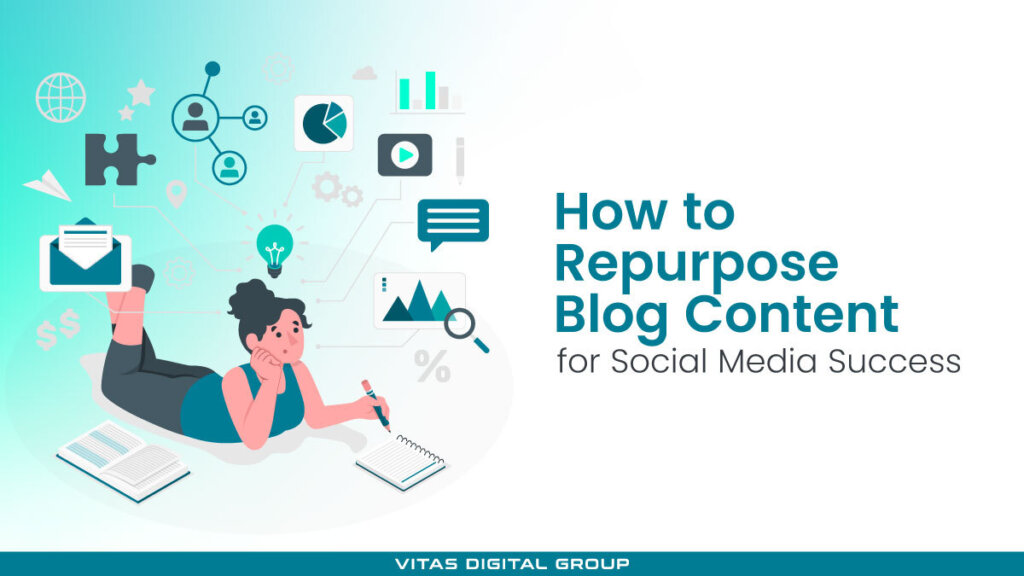
Content repurposing (content recycling) is the process of adapting existing content into new formats and platforms within your blog content management system. This practice helps manage content more efficiently and reach audiences who prefer video, infographics, or social posts.
For example, a deep-dive blog post can be turned into a carousel, short video clips, or even a mini-series on LinkedIn.
Throughout this post, we’ll cover how to repurpose blog content for social media, the benefits, practical strategies, and examples of repurposing content across platforms.
Why Repurpose Content?
Repurposing provides many advantages:
- Expand reach — your content lasts longer and reaches new audiences.
- Boost engagement — different formats appeal to different people.
- Reduce costs — one core idea repurposed into several assets saves time and resources.
According to Semrush’s State of Content Marketing Report 2023, 42% of marketers say updating and repurposing blog content led to successful campaigns.
Also, a survey by ReferralRock reports that 94% of marketers already repurpose their content. For example, let’s say a detailed how-to blog post performs exceptionally well. Repurposing it as a YouTube tutorial helps reach audience segments that might not read blogs.
That same post can also become an infographic, which is perfect for sharing on social media and managing content in a way that makes sure your message gets heard.
How to Repurpose Blog Content For Social Media?
In a good blog content management system, repurposing should be baked into your workflow — plan, produce, repurpose, and analyze across all platforms. Broad reach helps support AEO (Answer Engine Optimization), because content is present everywhere (websites, social media, videos), increasing chances of being cited by AI-driven answer engines.
1. Identify Content Worth Repurposing
Not every post deserves repurposing. Focus on ones that already gain traction or cover enduring topics (evergreen). These are your best candidates because they:
- Have proven engagement or traffic
- Address timeless or broad-interest themes
- Contain deeper insights, data, or frameworks
For instance, a how-to post you published that ranks well can turn into a downloadable guide, a video tutorial, or a social slideshow. HubSpot data shows that 60 % of marketers believe repurposed content generates more leads than brand-new content.
2. Match Content to the Right Format and Platform
Every platform has its own style and audience expectations. What works on Instagram might not fly on LinkedIn.
Here’s how to choose:
- Use video for storytelling or visual breakdowns
- Use infographics to summarize stats or processes
- Use carousels or slides for step-by-step explanations
- Use quotes or snippets for posts or stories
For example, convert a blog post into a carousel for LinkedIn, then extract key quotes into Instagram graphics.
3. Repurposing Ideas
Here are concrete ways to breathe new life into your content:
- Blog → Short-form video clips or reels
- Blog → Infographic or carousel
- Webinar → Blog + reels + highlights
- Blog series → eBook or downloadable resource
- Interview → Quote images, short reels, or audio snippets
Let’s say you have a long tutorial. That could produce a full YouTube video, ten micro-videos, and three social carousel posts.
4. Optimize for Each Platform
When adapting content, don’t just drop it in — optimize:
- Edit length and tone (more casual on socials, more detailed in blog)
- Tailor visuals (portrait vs landscape vs square)
- Use platform-specific features (hashtags, captions, tags)
- Add subtitles or captions in videos for mobile viewers
You might turn a horizontal YouTube video into vertical snippets for Reels or Shorts.
For brands managing content across multiple channels, professional social media management services can ensure that every post, caption, and visual fits each platform’s algorithm and audience style. This helps maintain consistency, improve visibility, and save time while scaling campaigns effectively.
5. Measure the Success of Repurposed Content
You need KPIs. Some useful ones:
- Traffic uplift (to original blog or landing page)
- Views, engagement (likes, shares, comments)
- Conversions (downloads, signups, purchases)
- SEO impact (keyword rankings, backlinks)
Use tools like Semrush’s Organic Traffic Insights or Google Analytics to compare before vs after. Analyze engagement, conversion data, and audience feedback to refine your repurposing strategy.
Content Repurposing Ideas
1. Define Your Goals
Don't start until you know what success looks like. Ask:
- Do you want better rankings, more conversions, or faster site speed?
- Is your goal to improve UX, consolidate duplicate pages, or optimize for a new audience?
Choose one or two primary goals so you can measure progress later. Here are three examples:
Increase organic traffic by 20% in six months
Reduce bounce rate on top landing pages
Update all product pages to reflect new offers
Each goal should guide how you evaluate and act on every content piece.
2. Create a Content Inventory
Before you can audit, you need to see everything you have.
Use tools like Screaming Frog, your Content Management System (CMS) export, or a sitemap generator to list all your:
- URLs
- Page titles
- Content types (blog, landing page, FAQ, etc.)
- Date published and last updated
- Traffic/performance metrics (if available)
Put this into a spreadsheet or content tracking system. This will give you visibility and ensure no content is overlooked or audited twice.
3. Evaluate Content Performance
Now that you've listed your content, it's time to evaluate how well each piece is doing. Check:
- Organic traffic (Google Analytics 4 or Google Search Console)
- Bounce rate and session duration
- Keyword rankings (via Ahrefs or Semrush)
- Conversion rate (if applicable)
- Backlinks or referral sources
Unlocking Long-Term Content Success
Repurposing content is one of the smartest ways to maximize your efforts, reach new audiences, and keep your brand consistent across formats.
If you’d rather leave this work to professionals, contact us and let’s help you transform blogs into high-impact social content.