On-page SEO refers to optimizing individual web pages to rank higher in search results and attract more relevant traffic. It involves fine-tuning elements like content quality, HTML tags, and site structure.
So, without a solid grasp of the basics of On-Page SEO, your website risks poor visibility, lower rankings, and ultimately reduced traffic and conversions.
But we're here to ensure that doesn't happen! Here, you'll find everything you need to know:
- What is on-page SEO
- Why it's vital for your success
- Step-by-step optimization tactics
- What is on-page SEO
Stay tuned for common pitfalls to make your efforts worthwhile and SEO frequently asked questions (FAQs).
What is On-Page SEO?
The right approach boosts organic traffic and helps your site appear in relevant search results. This brings more traffic and helps visitors find exactly what they're looking for without frustrating searches.
It also shapes how people see your business online, which is why on-page SEO plays a central role in web presence management.
- Content Quality
- Keyword Optimization
- Meta Tags
- URL Structure
- Internal Linking
- User Experience (UX
- Technical SEO
Even though Google's AI has evolved, it still relies on these basic signals, making this checklist essential for higher rankings.
Think of your site as a store where every product is neatly labeled and arranged, making it easy to find what you need. A well-optimized page does that for your visitors, ensuring they quickly find the information or products they're looking for.
On-Page SEO vs. Off-Page SEO
Unlike off-page SEO, which focuses on external signals like backlinks and social media, on-page SEO covers everything you can control directly on your website.
Check out this comparison to see how the two approaches differ:
Aspect | On-Page SEO | Off-Page SEO |
Definition | Efforts are made directly on your website. | Activities outside your website to boost visibility. |
Focus | Content, HTML, and overall webpage structure. | Building relationships, reputation, and authority externally. |
Key Elements | Content quality, keyword use, meta tags, URL structure, and internal linking. | Backlinks, social media marketing, online reputation, and influencer marketing. |
User Experience | Improving site navigation and ease of use. | Enhancing credibility through external signals. |
Page Load Speed | Directly improved for a better user experience. | Not a direct factor, though it can indirectly influence behavior. |
Mobile-Friendly | Ensuring your site works well on all devices. | Not a primary focus, but it still plays a role in the overall presence. |
Technical SEO | Addressing crawlability, indexing, and site structure issues. | Mostly centered around external factors. |
Backlinks | Focus on internal linking. | Acquire high-quality external links. |
Social Media Presence | Not the main focus, but it can be integrated. | Actively using social media for promotion. |
Authority Building | Building credibility through content quality. | Establishing industry authority via external signals. |
Link Building | Creating links within your site. | Building a natural mix of external links. |
Social Signals | It may indirectly affect user engagement. | Directly considered through likes, shares, and online interactions. |
Content Marketing | Central to on-page efforts by producing useful content. | Creating shareable content for promotion on other sites. |
Why Is SEO Important?
The right approach will boost your organic traffic, helping your site appear in relevant search engine results. This will bring more traffic and ensure visitors find exactly what they're looking for without the frustration of searching.
It also shapes how people see your business online, which is why on-page SEO plays a central role in web presence management.
Here are some examples of potential issues when SEO isn't prioritized:
- Low Visibility: Your site may not rank well, making it hard for potential customers to find you.
- Poor User Experience: Slow loading times, confusing navigation, or unclear content can frustrate visitors.
- Lost Conversions: When users can't easily find the information they need, they're less likely to take action.
- Technical Problems: Broken links, duplicate content, or missing meta tags can hurt your rankings.
If you're unsure how to avoid these issues, SEO optimization services offer audits, fixes, and ongoing support to strengthen your content and site performance.
DIY On-Page Optimization SEO
This practice now involves more than simply adding keywords—it requires refining every detail of your webpage to meet user expectations and search engine guidelines.
If you'd rather start small, a few quick SEO wins, such as fixing broken links or rewriting weak titles, can show results within weeks.
Below are step-by-step tactics so you can handle do-it-yourself SEO without feeling overwhelmed.
Title Tags
Title tags are a small piece of Hypertext Markup Language (HTML) code that tells search engines and visitors what a page is about. When you search online, the blue clickable link is usually the title tag and appears in browser tabs.
This tag plays a big role in helping search engines decide if your page should rank for certain searches and convincing users to click through.
Here are some best practices for title tags:
- Keep it concise: Aim for 50 to 60 characters so your title isn't cut off in search results.
- Place your primary keyword near the start: This signals its importance to search engines and readers.
- Describe your page accurately: Make sure your title reflects the content.
- Avoid keyword stuffing: Use keywords naturally without overloading the title.
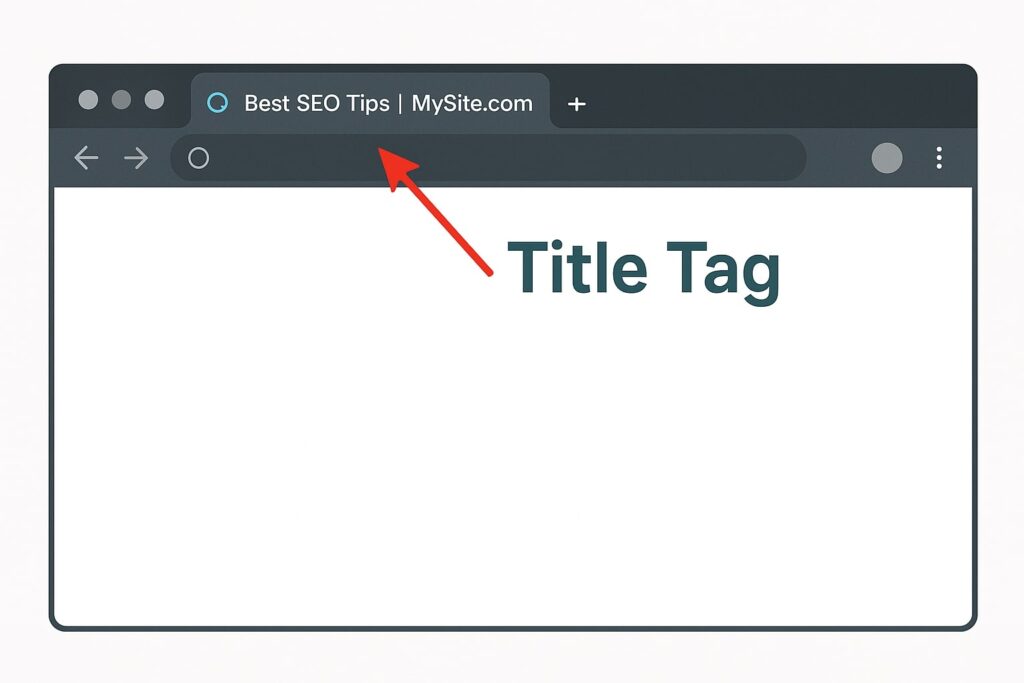
An SEO on-page optimization tool like Semrush's On-Page SEO Checker can help you verify that your title tags are clear, contain your target keywords, and are not duplicated across pages.
Meta Descriptions
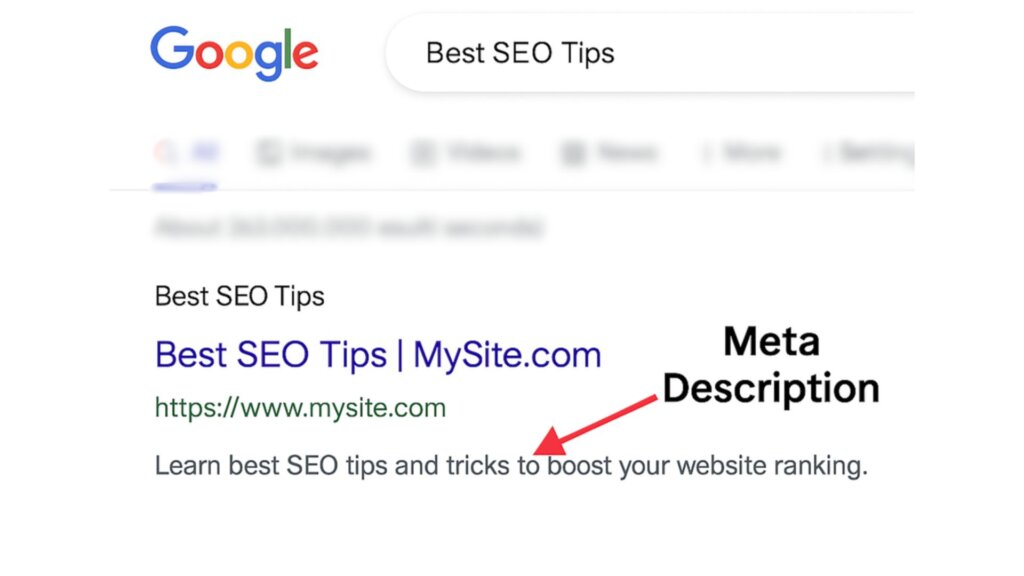
This HTML code summarizes a webpage's content and appears under your title tag in search results, giving visitors a preview of what to expect.
Although meta descriptions don't directly influence your page's ranking, they are key in encouraging people to click through to your site. How to write effective meta descriptions? Go with these tips:
- Be Concise: Keep your description under 160 characters to ensure it displays fully
- Unique Summaries: Write distinct descriptions for each page to avoid repetition.
- Focus on Value: Highlight what makes your page worth a visit.
- Include Keywords Naturally: Place your primary keyword once to highlight it in search results.
URL Slugs
The slug is the part of your webpage's address after the domain name. It should be a mini-description indicating what the page is about.
- Be descriptive and concise: Reflect the page's topic without unnecessary words (e.g., /how-to-check-google-ranking).
- Include your main keyword naturally: Helps signal the page's subject to search engines (e.g., seo-ranking-data).
- Separate words with hyphens: Use hyphens instead of underscores or other characters.
- Avoid extra clutter: Skip filler words like "and," "the," or "a" to keep it neat.
- Steer clear of dates or special characters: This maintains clarity and relevance over time.
- Use redirects if you change a URL: This preserves your page's ranking and prevents broken links.

Heading Tags
Heading tags are HTML elements that organize your content into sections and subsections, making it easier for visitors and search engines to understand your page's structure.
- One H1 per page: Should describe the main focus of your content and match or closely mirror your title tag.
- H2 tags break the content into major sections (e.g., "DIY On-Page Optimization SEO," "DIY SEO Maintenance Tips").
- H3 and beyond further divide these sections into specific points (e.g., "How to Add Keywords to Website for SEO," "Monitor SEO Ranking Data").
- Descriptive and keyword-friendly: Write headers that clearly explain each section's coverage and include relevant keywords where they fit naturally (e.g., "SEO for IT Companies: On-Page Essentials").
Writing Content
Before you begin on-page optimization, identify a relevant keyword for each page and build your content around it without overusing the word. According to Google's web search spam policies, keyword stuffing can hurt readability and rankings.
So, instead, naturally include your target keyword, along with variations and synonyms, in key areas like:
- Meta title
- Meta description
- Headings
- Subheadings
- Body text (naturally, 1–2 % density)
- URLs
How does Google know your content is helpful? It tracks user signals such as dwell time and bounce rate to determine whether your page delivers fast, clear answers to searchers' questions.
High-quality content improves user engagement and attracts backlinks from reputable sites (think Buffer earning links from Shopify and the New York Times).
To make your content even more reader-friendly, use:
- Clear headers
- Bullet points
- Visuals
If you publish a blog, the same elements apply when optimizing blog posts for SEO.
Image Alt Text Tags
Image alt text is a piece of HTML that briefly describes an image, helping search engines and screen readers understand what the image depicts.
- Clear, concise descriptions: Use descriptive phrases (e.g., "on-page SEO keyword checklist").
- Include keywords when natural: (e.g., "seo ranking data chart")
- Descriptive filenames and compression: Improves page loading times and accessibility.
Internal Links
Internal links are hyperlinks pointing to other pages on your website. They help users and crawlers navigate your site.
- Connect related content: Link from "On-Page SEO vs. Off-Page SEO" to "SEO Maintenance Tips."
- Guide visitors: For example, link a post on SEO principles to a tool tutorial on how to check my website's Google ranking.
- Boost important pages: Use internal links to spread "authority" to newer or deeper pages.
How do you catch gaps in your internal linking structure? Try with Semrush's Site Audit —it can reveal pages with few or no incoming links. Alternatively, if you need advanced strategies for placing internal links effectively, consider using on-page SEO optimization services for expert assistance.
Page Experience
Page experience focuses on how users interact with your web pages: fast, secure, and easy-to-navigate pages keep visitors around.
- Speed: Optimize images, use lazy loading, and remove unnecessary scripts to improve page load speed.
- Mobile-friendly design: Ensure fonts, buttons, and layouts adapt to small screens.
- Navigation: Clear menus, breadcrumbs, and logical site structure.
- Security: Enable HTTPS and address any security alerts promptly.
Result? A good page experience boosts user satisfaction and can improve search engine position.
How to Measure Success?
Tracking metrics is essential to measure SEO success effectively and accurately report search engine ranking. So, focus on:
- Website Traffic: Sessions, users, and pages per session from Google Analytics.
- Bounce Rate: Percentage of visitors who leave without interacting.
- Dwell Time: How long users stay on a page—longer times suggest helpful content.
- Click-Through Rate (CTR): Ratio of clicks to impressions in search results—check in Google Search Console.
- Keyword Rankings: Use tools like Semrush or Ahrefs to monitor SEO ranking data for target terms.
Fortunately, there are both free and paid tools available that can help you gather these insights. Here's a list of some popular options:
Tools You’ll Need
Here are the core SEO tools to get you started.
- Google Search Console – free site health & indexing insights
- Google Analytics – traffic measurement & user behavior
- Ahrefs (Free Trial) – keyword research & backlink analysis
- Surfer SEO (Paid) – on-page content optimization
These tools work best as part of a regular on-page SEO audit, so you catch issues before they affect your rankings.
Practices That Can Damage On-Page SEO
Bad SEO can violate Google's guidelines, leading to a low site's rank, poor user experience, and penalties. Watch out for:
- Low-quality or duplicate content: Fails to answer user queries and confuses Google.
- Keyword Stuffing: Overloading a page with keywords makes reading hard and unnatural.
- Excessive ads above the fold: Drives visitors away before they see your value.
- Unethical backlinks: Buying or swapping links leads to penalties.
- Over-optimized anchor text: Repeating keywords in every link looks spammy.
- Content spinning or plagiarism: Thin, copy-pasted content has no value and will get dropped.
Ready to Kickstart Your SEO Strategy?
Title tags, meta descriptions, internal links, and content quality—when done right, they help users stay longer and search engines rank you higher. Good SEO is clear, structured, and consistent.
Schedule a call with our on-page SEO team to fix weak spots and improve your site’s performance.